Saturday, 16 March 2019
DISTRIBUTION Moby gives sleep app 30 day exclusive

Friday, 1 February 2019
UGC VIRAL TikTok and RockSmith
Thursday, 31 January 2019
STREAMING RATES Raw deal for some Indies
Thursday, 17 January 2019
UGC Fans film Slash performance video
Wednesday, 16 January 2019
INDUSTRY 2018-19 points
See below for a list of themes/points/case studies covered.
The idea of this is to gather a range of resources, as I encounter them, which help to inform you on the music industry. it will be a rather big post! Use this with an earlier summary with examples mostly not referenced here, but also the various tags!!!
 |
| Do they pay enough? This audio atrocity made a lot of money for a charisma-free star... Read on to find out who |
“At the beginning of the digital revolution it was common to say that digital was killing music,” said Edgar Berger, chief executive of the international arm of Sony Music Entertainment. Now, he added, it could be said “that digital is saving music.” [NYTimes]
......
Did you know that primitive, bleepy (polyphonic) ringtones were the 1st major market for the music biz on the then new smartphones? This headline comes from 2005, when people paid up to $/£4 for a single ringtone, changing these as the charts changed. Online distribution, popularised by piracy site Napster from 1999, began to be monetised by labels from 2000, and by 2003 this was a booming market. In a sign of how fast things change, digital downloads, the 2nd big market, are tipped to disappear soon ... and the ringtone market (and charts!) already has. Of course, there's now a retro market for this defunct technology, and Crazy Frog lives on...
....
 | |||
| TO EDIT...... http://ultimateclassicrock.com/metallica-napster-lawsuit/ https://www.rollingstone.com/music/music-features/tim-ingham-music-industry-status-2018-771105/ | HMV is a bedrock of the British music industry – its loss would affect us all | https://www.theguardian.com/music/2018/dec/30/hmv-is-a-bedrock-of-the-british-music-industry-its-loss-would-affect-us-all?CMP=Share_AndroidApp_Copy_to_clipboard |
IN THIS POST:
I began this just as a summary on a report on UMG's increasing profits, but I've widened it out to provide key facts/figures on the music industry. As well as multiple tags (monetising, merchandise, music industry, Spotify, distribution etc) you can find key posts like this industry summary, ppt on Bicep example with more egs of monetising, and this post with graphs and stream revenue calculators, + this 2018 summary which drew on multiple articles:
- when did it peak (were revenues highest)? 1999
- why did revenues fall after this? Online distribution made piracy easy (eg Napster) and undermined the appeal of expensive CDs
- by today a whole generation has grown up with the attitude that music is/should be free; not prepared to pay for albums (there's even a political party campaigning for this: The Pirate Party)
- ...indeed, the album is being undermined, with streams from albums on Spotify typically focused on just 3-4 songs
- monetizing recorded music is therefore not as easy as it once was;
- the existing business practice, distributing recorded music as physical media, was disrupted by convergence/digitisation
- the smartphone (+phablets/tablets) is the key converged device for the music industry, overtaking the PC where previously people would access the likes of Napster
- by 2012, streaming/digital sales revenues overtook physical sales in the US
- it wasn't until 2017 that this happened in the overall, global market (broadband, 3G/4G rollout and take-up being slower in many markets)
- the digital sales market was initially key, especially iTunes sales, but will soon be overtaken by vinyl revenues!!!
- other early digital markets have quickly disappeared as technology accelerated: ringtones were a huge market just a decade ago
- the video in this post uses the 'polymorphic', 8-bit music style that people used to pay a few euros to get for their phones, before continued convergence made it easy to load your own (probably ripped from YouTube) MP3
- starting in 2000, this was the 1st way the music biz had of making money from phones - the US ringtone market alone was worth $300m by 2004 (Japan $900m, globally about $3.5bn [see Wiki]). It declined from 2008 on; by 2014, the ringtone chart was abandoned (see this article)

a whole market that's now gone: polyphonic ringtones - see this interactive website to sample a range of ringtones over time!
- streaming now accounts for over half of all music industry revenues and is growing, while physical media sales continue to fall
- UMG 2017-2018: digital (streaming/sales) up 1/3, physical down 20%
- the payment per stream remains controversial: the music industry strongly argue that YouTube especially must pay much more - see the calculator below
- the EU may pass laws to force YouTube to pay more...
- ...which may lead to millions of fan videos being taken down!!!
- touring (tickets) and merchandising, + sponsorship, tie-ins, etc are another key means of monetising for artists and labels
- but labels increasingly force artists to sign '360 deals' including image rights + a % of tour revenues

........................................
DOES YOUTUBE PAY ENOUGH PER STREAM??
I've blogged on this (and Spotify and others before); here's a revenue calculator for 1 of the most streamed videos ever ... you can try it for others ...

UNIVERSAL'S PROFITS SOAR EVEN AS PHYSICAL MEDIA CONTINUES TO FALL
- UMG's streaming revenues are greater than Spotify's total revenues, a reminder of the diversity within a market dominated by bug names like Spotify, YouTube and Apple, but with plenty more such as Amazon and Deezer.
- Overall revenues are rising despite continuing steep falls in physical media revenues.
- Rock music is very much secondary to rap/rnb/urban for sales (this goes back about a decade)
- YoY = year-on-year (eg 2018 profits up on 2017's)
- Q4 = Quarter 4 (businesses publish reports on revenues, profits, losses every 3 months ... every quarter
If you were to ask Sir Lucian Grainge what his favorite genre of music is right now, you’d have to guess he’d say hip-hop.
According to Vivendi, Universal Music Group’s five biggest revenue-generating artists in the first nine months of this year were: (i) Drake; (ii) Post Malone; (iii) Kendrick Lamar; (iv) XXXTentacion; and (v) Migos.
These acts drove UMG’s recorded music sales in the first nine months of 2018 to an all-time high of €3.28bn ($3.93bn), up 10.2% YoY at constant currency.
HOW PROFITS BEGAN RISING AGAIN AFTER FALLING EVERY YEAR FROM 1999-2011
The music industry, the first media business to be consumed by the digital revolution, said on Tuesday that its global sales rose last year for the first time since 1999, raising hopes that a long-sought recovery might have begun.UNIVERSAL'S GRIP TIGHTENS AS THEY SIGN UP TAYLOR SWIFT
The increase, of 0.3 percent, was tiny, and the total revenue, $16.5 billion, was a far cry from the $38 billion that the industry took in at its peak more than a decade ago. Still, even if it is not time for the record companies to party like it’s 1999, the figures, reported Tuesday by the International Federation of the Phonographic Industry, provide significant encouragement.
“It’s clear that 2012 saw the global recording industry moving onto the road to recovery,” said Frances Moore, chief executive of the federation, which is based in London. “There’s a palpable buzz in the air that I haven’t felt for a long time.”For years, the music industry’s decline looked terminal, with the record companies seemingly unable to come up with digital business models that could compete with the lure of online piracy. Last year, however, digital sales and other new sources of revenue grew significantly enough to offset the continuing decline in CD sales.
Universal just tightened its grip on the industry with the signing of Taylor Swift, though they agreed to give her ownership of the masters of all recorded music, a big change from usual industry practice, and to pass money from sale of its shares in Spotify to its artists.
https://www.theguardian.com/business/2018/nov/24/taylor-swift-blow-fellow-artists-streaming-revenues-soar-universal-spotify?CMP=Share_AndroidApp_Copy_to_clipboard
Metallica launch Enter Night Pilsner, building on whiskey (Rolling Stone).
They even released a 'making of' video! (Blabbermouth)
https://www.musicbusinessworldwide.com/jobs/spotify-manager-artist-label-marketing-us/
Physical sales so reduced, a Jan 2019 #1 only had 823 album sales!!!
Average Spotify user only paying 5.5o, and falling, as global rollout in poorer countries builds and family plans too.
https://www.hypebot.com/hypebot/2019/01/record-labels-evolve-to-stay-relevant-in-the-streaming-era-musonomics-report.html
https://www.billboard.com/articles/news/features/8492870/spotify-direct-to-artist-tools-label-territory
https://www.newstatesman.com/2019/01/is-the-music-industry-dead
Saturday, 5 January 2019
APPLE Platoon record label
https://www.rollingstone.com/music/music-features/apple-just-bought-a-company-that-acts-like-a-record-label-why-774480/
https://www.hypebot.com/hypebot/2019/01/5-2019-music-industry-predictions.html
Sunday, 23 December 2018
VIRAL How big 3 grab copyright of UGC in promo campaigns
Interesting blogger in music industry worth following. Her major contention here is that the labels are quietly subverting notions of the fan/audience empowering potential of converged social media, angrily noting a Sony example of claiming a hashtag use as a binding legal contract handing over all rights in perpetuity with zero compensation (other than glory!).
The former audience as audience 3.0, working for The Man?
https://www.getrevue.co/profile/cheriehu42/issues/the-music-industry-s-inconvenient-truths-149151
Thursday, 13 December 2018
ALT VIDS Depeche Mode Facebook unboxing by fans
Great example of a fan/UGC format being used by artists as a promo tool.
(Pics/link to follow shortly)
https://www.facebook.com/depechemode/posts/1824136607713230/
Saturday, 8 December 2018
WEB 2.0 MARKETING Musical.ly and making Lil Pump viral
Thursday, 22 November 2018
POST-FEMINISM Ariana Grande on choosing to use sexuality
This is a nice example of the post-feminist stance
Ariana Grande criticises Piers Morgan over nudity comments https://www.theguardian.com/music/2018/nov/22/ariana-grande-criticises-piers-morgan-over-nudity-twitter-comments-little-mix?CMP=Share_AndroidApp_Blogger
Saturday, 17 November 2018
INDIE STREAMING labels launching mini-Spotify
SELF-PUBLISHING by Indie act gr8 industry insight
https://youtu.be/Ehg15tYK5LI
A solo artist speaking about his experience of dodgy Indie labels who sell themselves on doing the online work like getting tracks onto Spotify etc ... And how easy he realised this was when he tried for himself after discovering how the label were letting him down.
You'll note how he plugs his own website, and holds up physical copies of his CDs, in trying to monetise his music ... He even signs off with a plea for viewers to add his songs to their Spotify playlists to boost their plays!
More news on Indie distribution: https://www.musicbusinessworldwide.com/glassnote-signs-global-distribution-deal-with-kobalts-awal-leaves-behind-major-label-system/
Friday, 16 November 2018
YOUTUBE faces EU music video rights hike
https://www.rollingstone.com/music/music-features/whos-telling-the-truth-youtube-or-the-music-industry-756663/
Spoiler alert ... the tech giants won this battle:YouTube and Facebook escape billions in copyright payouts after EU vote
Great article + big news, as this impacts YouTube's distribution of music videos - it could lead to a mass deletion of music videos from the site, pending clear + specific agreements being signed with labels/rights holders.
NB: there is no change in law YET; this initial requires a further vote in the European Parliament in July before it takes on legal status, and it seems likely several states will object to it.
The quotes below contain some killer stats, the type I've often cited before:
- YouTube pays out about 67¢ per its 1.3bn music video-watching users ($856m/£650m annual)
- that's less than half the total royalties payout for 25 BILLION streams than is generated by just 4.1m vinyl record sales!!!
- Spotify pays out about $20 per user (272m users, annual total $5.6bn royalties)
For years the music industry has argued that YouTube exploits the lack of legal protection around music videos being viewed on its service to pay minimal amounts to artists and labels when they are viewed. The music industry has lobbied that this “value gap” between the true worth of the music videos and what YouTube decides to pay needs to be addressed with legislation....
On Wednesday, a crucial vote by the European parliament’s legal affairs committee went the way of the music industry with an agreement to adopt copyright laws that will force platforms such as YouTube to seek licences for music videos.
YouTube has an estimated 1.3 billion users who regularly watch music videos and it paid $856m (£650m) in royalties to music companies last year – an estimated 67 cents per user annually. In the UK, record labels and artists earn more than double the royalties from the sale of 4.1m vinyl records than they did from the 25bn music videos watched on YouTube last year.
By contrast, income from the 272 million music fans who paid for ad-supported services such as Spotify, generated $5.6bn in royalties, or about $20 per user annually.
Thursday, 15 November 2018
DISTRIBUTION Scuzz kicks the bucket but video channels live on
Interesting, contradictory week - Metal Hammer TV launched to rival fellow metal magazine Kerrang! which has a thriving station. The convergence is furthered by some radio offerings by the likes of Q too.
However, MTV Rocks has gone (replaced by VH1 Christmas, just what the world needed), and so too has the Sony brand Scuzz TV, a 15-year show on Sky credited with many video premieres and breaking several bands.
Mixed picture then - there are still TV stations and shows out there based around the music video, 20 years on from MTV's shift towards moronic reality TV such as Pimp My Ride, an epically non-woke title if ever there was one.
But they are getting more niche, small channels rather than shows on major channels. The likes of Blabbermouth and other ezines with their social media presence are at least as important for music videos and promo campaigns generally.
YouTube looms above the rest, with Spotify and Apple also moving into music video - like radio, a resilient format that remains central to music marketing.
https://www.bbc.co.uk/news/amp/newsbeat-46196569
Saturday, 10 November 2018
DIGITISATION album sales halve 2015-18 singles rule again
Lot of great detail here, the bottom line being not just the accelerating decline of physical media sales, but the death of the album - with examples given such as Drake's 25-track album where 3 songs account for over 60% of all streams from the album, 19 others a combined 18%!
https://www.rollingstone.com/music/music-features/the-album-is-in-deep-trouble-and-the-music-business-probably-cant-save-it-753795/
MERCHANDISE Metallica tick off fans
These guys are becoming the Man Utd of music, squeezing every angle for money. It's not that long ago they launched their own whiskey line, now it's expensive ($125-500) watches, with 8 themes to pick from.
As they (almost) growled on Enter Sandman:
If I buy before I wake
I pray the lord my brain to take
http://www.blabbermouth.net/news/metallica-watches-have-arrived-video/
Here's a Ppt I put together analysing some samples of their merchandising.
Saturday, 3 November 2018
MERCHANDISING Kylie duvets furnishing fortunes
Monday, 29 October 2018
DISRUPTION How Spotify may beat big 3
Friday, 26 October 2018
Indie acts
serious, sombre, dark themes
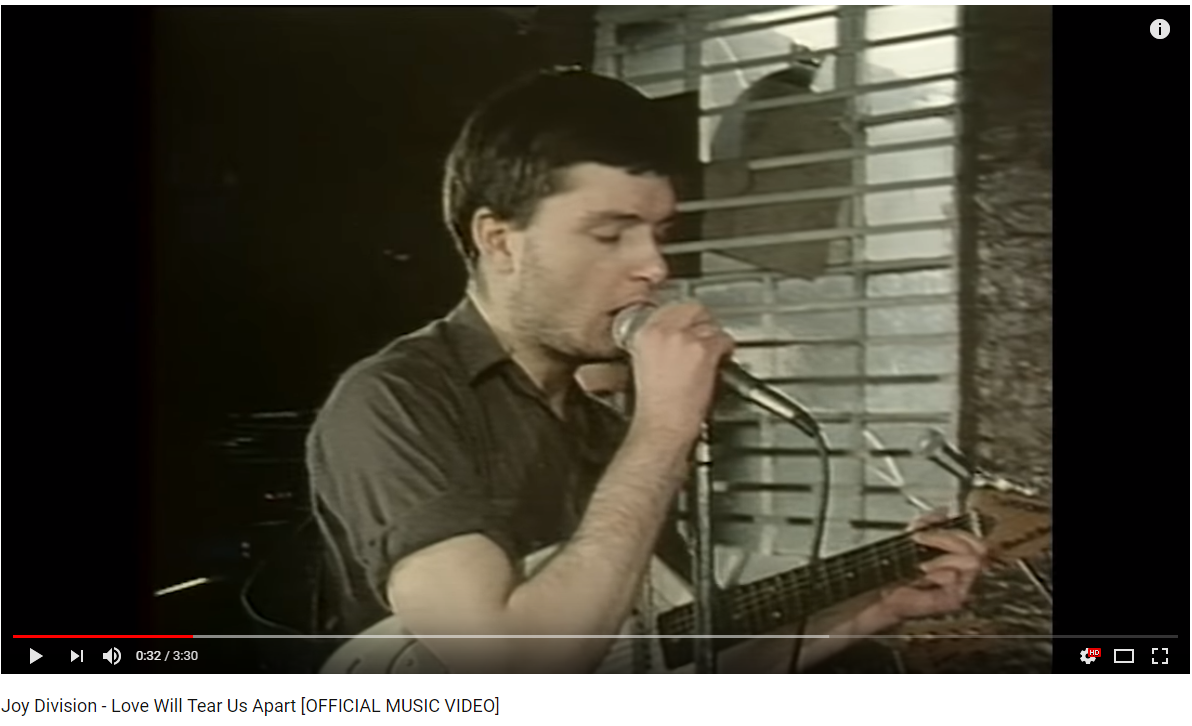 |
| that serious tone extends to performance |
B+W not uncommon
auteurs like A. Corbijn (Joy Div etc)
quirkiness though
some use of longer takes
colour correction (Joy Div eg), can be colourful (The Cure) or more likely bleak, nihilistic (JoyDiv). D Mode's early vids often featured the red Mute logo against B+W footage
Bleak, rundown settings
 |
| JoyDiv |
- BUT look at johnmoule.com - the trend is moving away from this...because of falling budgets; its simply more expensive to gather a band as well as do a narrative (narrative can be done anywhere)
- John McMuria's research highlights that the big 3 conglomerates still dominate the new media outlets like YouTube
- Anita Elberse found the same, making mincemeat of the long tail theory
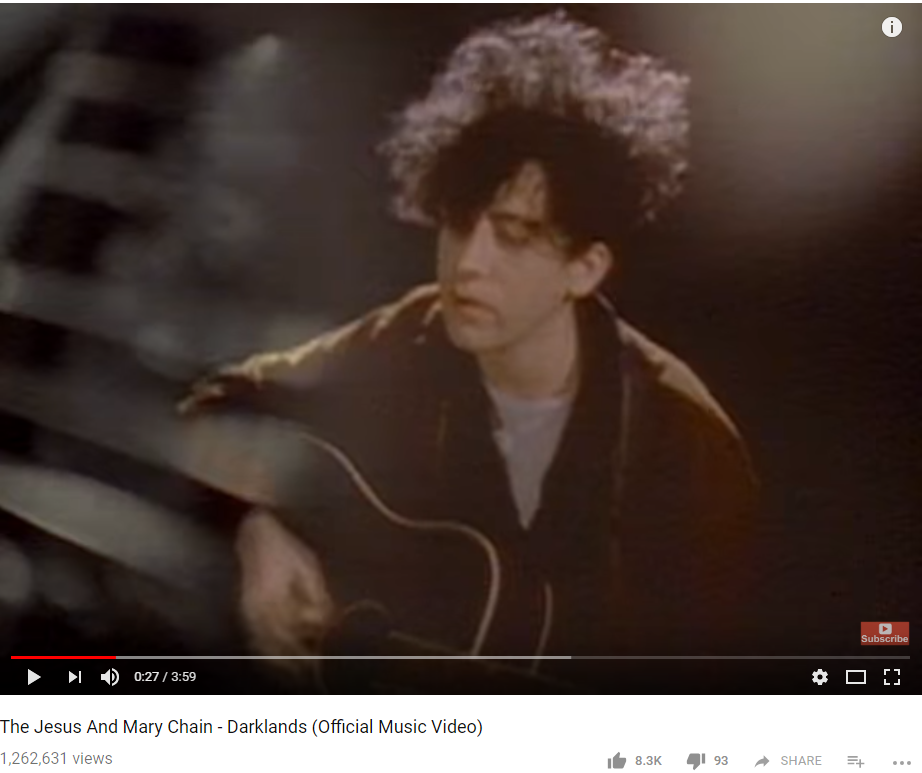
Shoegaze is a specific mode of Indie performance; bands like Jesus + Mary Chain played with heads down ... gazing at their shoes, not the audience. 6min doc; other shoegaze docs. Key bands My Bloody Valentine,
 |
| JMary |
Low key lighting is the norm, but this low-budget aesthetic can also be seen with overexposure too:
 |
| Mary Chain |
 |
| Mary Chain again |
 |
| JMary |


 |
| Vid |
 |
| Vid |
 |
| Vid |
 |
| Honeyblood |
Often credited as the 1st Indie single release, a real favourite of legendary DJ John Peel (doc), whose radio play broke many bands through to mainstream success...
Arctic Monkeys are clearly in the tradition: low key lighting, emphasis on musicianship (John Moule recalls their unusual determination to control their promos), dark clothing, hair's a biut shorter than older bands but still recognizably Indie...


 |
| Sun Goes Down |

 |
| Vid |
B+W
grim mise-en-scene
hair, clothing
shoe gaze downwards looking
rule of thirds for emphasis on musicianship
quirkiness before this
low key lighting
...
 |
| Vid |
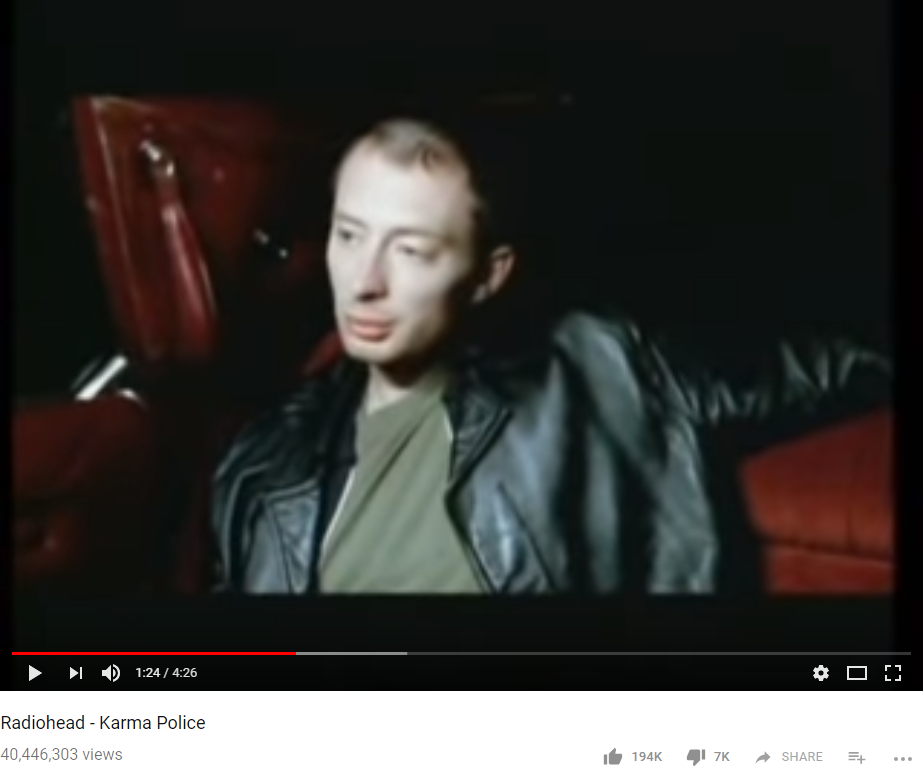
Radiohead - miserable skinny male; some aspects of Indie clothing; emphasis on musicianship...
 |
| Vid |


Jesus and Mary Chain
Pixies
Joy Division eg1, eg2.
Primal Scream
Depeche Mode (dance/pop but Indie)
Beggars Banquet
Anything on 4AD
Suede
(Goth)
Siouxsie and the Banshees
The Mission
Sisters of Mercy
The Cure
Sunday, 21 October 2018
Baudrillard's 'simulacra': Weezer's Buddy Holly eg
KEY TERMS: postmodern(ism) meta-narrative Baudrillard: simulacra deconstructionism intertextuality Barthes: action codes auteur theory camp queer/ed/ing Mulvey: male gaze feminist v post-feminist countertype stereotype normative hetero-normative Hebdige: subculture Bourdieu: cultural capital Thornley: subcultural capital McQuail: uses and gratifications
EG's REFERENCED:Weezer Buddy Holly
Depeche Mode It's No Good
Outkast Hey La
Beastie Boys Sabotage
Miley Cyrus Wrecking Ball
Nirvana In Bloom
Charli XCX + Troye Sivan 1999
(+ auteur directors Michel Gondry + Spike Jonze)
 |
| Here we have a 2018 video heavily intertextualised with 90s/noughties references. The full preferred reading is unlikely to be accessible to XCX's primary audience |
 |
| And here we have 1 of the key influences on Rose McGowan's outfits - so, a signifier of a signifier of a signifer ... Baudrillard's simulacra |
HOW THIS XCX VID ILLUSTRATES AUDIENCE TECHNIQUES
Bourdieu's CULTURAL CAPITAL: We could argue that the XCX are knowingly suggesting those who can recognise or figure out the refs have higher cultural capital, though as pop culture references that only holds true within social groupings that value popular culture (Bourdieu analyses how the cultural preferences of economic elites is deemed high culture and more worthy, linking culture and social class)
The original MTV awards pic from 1998.
Thornley - Hebdige's SUB-CULTURE: Thornley adopted Bourdieu to refer specifically to subcultural (Hebdige's term for distinctive social groups, especially youth) capital. Amongst young teen pop fans (not to mention the band's fanbase more specifically) recognition of this set of intertextualities would be seen as impressive (so: offering increased cultural capital)
McQuail's USES + GRATIFICATIONS: Discussing this also offers education, entertainment and personal interaction.
Reynolds' RETROMANIA: It further taps into what Simon Reynolds dubs Retromania in his book of the same name: our web 2.0, converged age offers up easy, cheap access to past popular culture that once required dedication and considerable expense (record collecting).
Altman's SET OF PLEASURES: The video offers an 'intellectual puzzle', one of 3 categories of audience pleasure Altman identifies as common strategies.

OVERVIEW:
A short post, just reflecting a discussion today on the postmodern philosopher Baudrillard's contentious (but ingenious?) concept of the simulacra, which argues that as we now exist in an endless sea of signifiers, or chains of signifiers with no concrete starting/reference point, we cannot claim to know of any actual 'reality'. So, Disneyland is the real America; the Gulf War, supposedly fought on our TV screens in 1991, never really happened, to take two of his most infamous proclamations.
Its a concept which often and readily applies itself to music video, with many videos influenced by other videos which may have been influenced by other media (especially TV/film) in turn. Weezer's Buddy Holly, directed by Michel Gondry, is an exemplar - it is a representation of a 90s band as part of a 70's TV show about 50's America, which heavily influenced perceptions of that decade (so, the long chain of signification in which any perceivable reality has been utterly lost, and is rendered unknowable)
Below the video I've uploaded a photo of p. 175 from the excellent Money For Nothing, Austerlitz's history of the music video; he describes the video, for example, as 'a pastiche of a pastiche'. We would later see Nirvana and other acts (see Outkast's Hey Ya at the end of the post) copy this idea of inserting the act into an old TV show (and the Beastie Boys, of course, created their own affectionate pastiche of the 70/80s cop show with Sabotage).
ANALYSIS:
Music video is both widely influential on other media and borrows heavily from other media in a 2-way dynamic flow.
In anything from Top Gear's car reviews through Guinness ads and Michael Bay films we can see the short takes, selective slo-mo, shot variety etc that are basic conventions of music video.
Likewise, we can see many of what Barthes termed action codes are common in music video, such as whip pans (especially common in performance footage).
The Weezer video illustrates the auteur theory: this is as much known as a Spike Jonze (the director) video as a Weezer video! Jonze's distinctive style is on display here.
Its a great example of the postmodernism that is also a basic, common feature of music video. That 'wide borrowing' from other media is intertextuality - and this example takes this to such extremes that it also neatly encapsulates Baudrillard's simulacrum theory.
The degree of irony, the camp representation, is also a common aspect of music video. The band are portraying themselves ironically as stiff, goofy - look at Depeche Mode's It's No Good for another great example of this postmodernist quality: deconstructionism. (Using conventions or cliches in a knowing, self-aware way to effectively critique them - they employ blatant male gaze with POV shots which cut to cleavage close-ups for example - just as Wes Craven did with Scream, whose characters discuss the conventions of horror films ... "I'll be right back...")
The postmodernist attack on meta-narratives (ideologies or systems that represent unifying ideas of how things do or should work) can also be seen with the rise of post-feminist critiques of feminist thinking. We can see a classic example of what Laura Mulvey termed the male gaze in GnR's W2TJ; Mulvey would be just as righteously angry at Miley Cyrus' Wrecking Ball video. Sinead O'Connor publicly warned Cyrus about male record bosses' exploitation. Cyrus' response was a post-feminist position: I have chosen to express my sexuality this way, I have agency (control), not the male director, manager or record label boss.
her queering of gender identity furthers this point, and is seen as a useful feature for attracting a 'woke' millennial (youth) audience, less accepting of normative representations than older generations.
 |
| Austerlitz on the Weezer vid |
FROM THE WIKI:
Postmodernist French social theorist Jean Baudrillard argues that a simulacrum is not a copy of the real, but becomes truth in its own right: the hyperreal. Where Plato saw two steps of reproduction—faithful and intentionally distorted (simulacrum)—Baudrillard sees four: (1) basic reflection of reality; (2) perversion of reality; (3) pretence of reality (where there is no model); and (4) simulacrum, which "bears no relation to any reality whatsoever".[7] In Baudrillard's concept, like Nietzsche's, simulacra are perceived as negative, but another modern philosopher who addressed the topic, Gilles Deleuze, takes a different view, seeing simulacra as the avenue by which an accepted ideal or "privileged position" could be "challenged and overturned".[8] Deleuze defines simulacra as "those systems in which different relates to different by means of difference itself. What is essential is that we find in these systems no prior identity, no internal resemblance".[9]
See the ProdEval blog for more on this and other media theories.
...
...
Tuesday, 16 October 2018

Monday, 15 October 2018
MONETISING pay a grand to be on stage
Friday, 12 October 2018
CONVERGENCE Metallica drones as effect
Wednesday, 10 October 2018
SPOTIFY male dominated playlists keeping women down
Has 10 years of Spotify ruined music?
Monday, 1 October 2018
ALT VIDEOS vertical version convergence UGC
Simon linked this eg by the world's biggest-selling artist of recent times, the ubiquitous Taylor Swift. She makes for an interesting digitisation/convergence case study already - she initially refused to allow her albums to appear on Spotify and Apple Music, forcing Apple to abandon plans for a free version of Apple Music with lower artist payments.
and here's the original
Think about why artists do this:
- primarily more control over monetising their work
- but also accessibility: creating the sense/brand image that they are to some degree at the level of their audience still (in this case shooting simple vids through their smartphone)
- standing out: multi-versions like this generate articles/news stories, thus more hits and more revenue
- for ultra-mainstream artists like Swift maintaining wide audience appeal through single narrative videos can be difficult, so these help to target specific demographics